

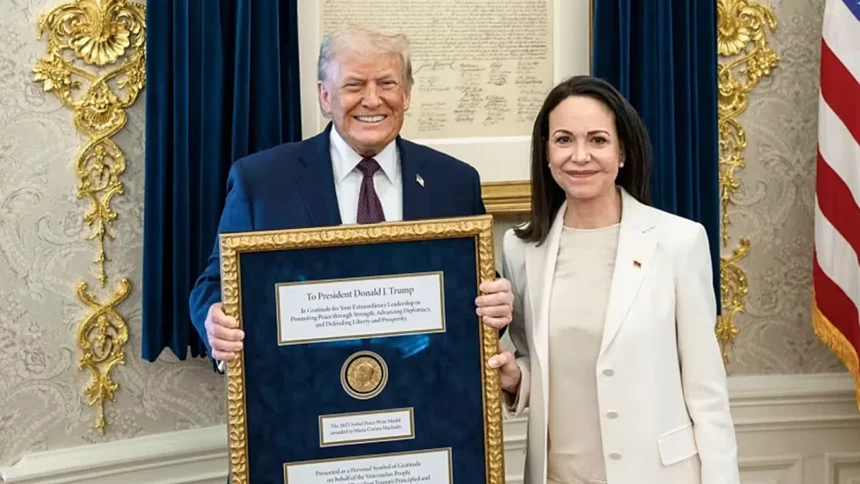
In a calculated diplomatic gesture, Venezuelan opposition leader Maria Corina Machado presented her 2025 Nobel Peace Prize medal to President Donald Trump on January 15, 2026, during a White House meeting aimed at securing U.S. backing for democratic reforms. Trump accepted the symbolic plaque but offered no firm commitment, highlighting tensions in post-Maduro leadership contests. This move underscores Machado’s push for alliance amid rival claims.
Key Events from the White House Encounter: What Transpired
Machado arrived bearing the Nobel Peace Prize medal, framing it as gratitude for Trump’s role in capturing Nicolás Maduro. She left with a branded swag bag but no explicit pledge of support. The session lasted under an hour, followed by her Capitol Hill visits.
Trump posted on Truth Social, claiming the gift honored “the work I have done.” Machado described the exchange as “historic,” emphasizing institutional rebuilding needs. No policy shifts emerged immediately.

The Nobel committee clarified medals cannot transfer ownership or titles. This detail amplified scrutiny on the gesture’s validity.
Behind the Gesture: Machado’s Strategy and Trump’s Stance Explained
Machado seeks to bolster her position against interim leader Delcy Rodriguez, whom Trump views as pragmatic for stability. Her Nobel presentation aimed to leverage Trump’s award obsession, evident in past social media rants. Analysts note this as a high-risk bid for endorsement.
Trump’s team assessed Machado lacks broad Venezuelan support. White House statements praised her bravery but reaffirmed no leadership change. This stance prioritizes oil deals over full democratic overhaul.
Machado: “I presented the medal as recognition for his unique commitment to our freedom.”
Trump: “Such a wonderful gesture of mutual respect.”
Nobel Center: “A medal can change owners, but the title cannot.”
Venezuela’s Post-Maduro Landscape: Oil Reforms and Prisoner Releases
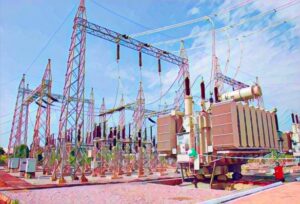
Trump’s administration backs Rodriguez for enabling oil investments in untapped fields. This policy accelerates without prior infrastructure demands, potentially injecting billions into Venezuela’s economy. Yet, it sidelines opposition figures like Machado and Edmundo González.
Political prisoner releases remain partial. Families protest at prisons, demanding full accountability. Only dozens of hundreds have surfaced, exposing gaps in goodwill gestures.
International observers warn this approach risks entrenching regime remnants. U.S. focus on energy security overshadows human rights priorities.
The Perspective: Future Implications for Democracy and U.S. Influence
This encounter propels a pivotal shift, where Machado’s bold overture challenges Trump’s preference for quick stability over sustained reform, potentially fracturing opposition unity and delaying genuine elections. By prioritizing oil alliances with Rodriguez, the U.S. risks alienating democratic advocates, fostering long-term instability that could echo past Latin American interventions. Ultimately, this dynamic accelerates Venezuela’s economic rebound but undermines broader freedom gains, positioning Trump as a transactional arbiter rather than a principled ally.
Machado’s Nobel presentation exposes the fragile balance between symbolism and substance in international relations, urging a reevaluation of U.S. strategies in fragile states.